Trench Silo Revival: Protecting Farm Equipment with Innovative Design
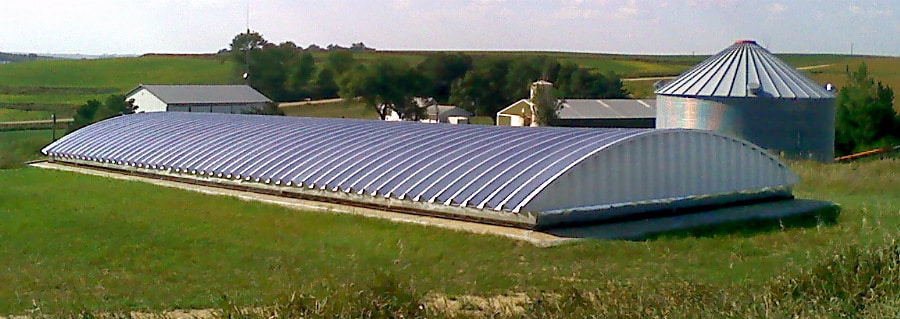
Jim Countryman knows that wasted space is wasted opportunity. When the Iowa farmer looked at his 25-year-old trench silo sitting empty after decades of storing corn silage, he saw potential where others might have seen an obsolete structure.
The Ingenuity of Trench Silo Design
A trench silo represents one of agriculture’s most practical innovations. While not a new idea, historically being used in Europe for farm storage, in the early 20th century, North American farmers updated and adapted its uses. Unlike traditional upright silos that require significant construction and materials to build vertically, a trench silo works with the earth rather than against it. By excavating a long, rectangular pit into the ground, farmers create storage capacity using the soil itself as structural walls. This below-grade design offers natural insulation, requires less building material, and provides a low-profile footprint that doesn’t dominate the landscape.
For Countryman’s Moville, Iowa operation, the trench silo had faithfully served its original purpose for years, holding feed for his cattle operation. But as his farming needs evolved and the structure sat dormant until he recognized its potential for a second life by adding a container cover roof.
Why Countryman Chose To Revamp His Trench Silo With A Steel Roof
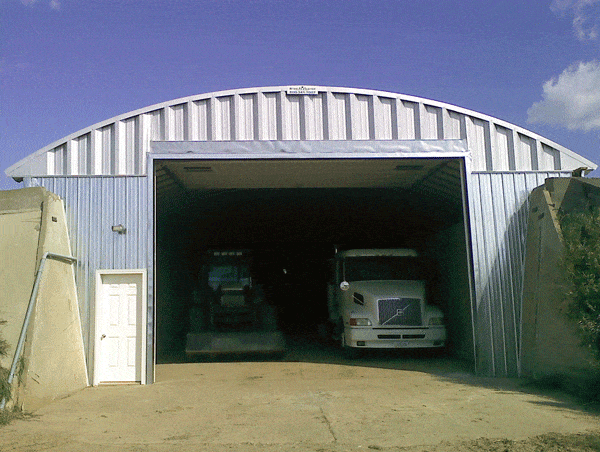
Farming equipment is expensive, so investing in protecting it from the elements is worth it. A tractor with hail damage or a truck with a broken windshield costs farmers in repair costs and lost productivity in an industry where timing can mean the difference between a failed or successful harvest. Pole barns can be cheap to construct but won’t last over time while traditional straightwall metal buildings can have their roofs ripped off in extreme winds or weather.
Countryman initially tried covering the space with canvas, but that proved wholly inadequate for protecting such valuable investments. He needed something engineered for durability and strength, so he turned to SteelMaster for a container cover with an arched roof design to protect his three tractors, semi truck, a combine and two combine heads. These machines represent hundreds of thousands of dollars in investment that deteriorate rapidly when exposed to Iowa’s harsh weather cycles.
The arched steel roof configuration is particularly apt for equipment storage. Unlike flat or peaked roofs that create load concentration points, an arch distributes weight evenly across its entire span. This means superior snow load capacity, critical in Iowa winters, and exceptional wind resistance. The curved design naturally sheds precipitation and debris, preventing the pooling and accumulation that plague flat structures.
Equally important, arched steel roofing requires no interior beams, trusses, or support columns. For Countryman’s machinery storage, this means maximizing every inch of the excavated space. Modern farm equipment, with its wide headers, extended booms, and oversized tires, demands unobstructed clearance. The clear-span design allows Countryman to maneuver equipment in and out without having to navigate around structural obstacles.
SteelMaster’s container covers also deliver cost-effectiveness that traditional construction cannot match. The buildings require minimal construction expertise to install, keeping labor costs down. Their engineered simplicity means fewer components, faster assembly, and reduced long-term maintenance compared to conventional wood or pole barn structures.
Standing Out Through Smart Adaptation
Countryman’s repurposed trench silo now stands out among neighboring farms, not just for its distinctive arched SteelMaster roof, but for what it represents. It’s a testament to agricultural ingenuity: recognizing that yesterday’s solutions can be adapted to meet tomorrow’s challenges. The same excavation that once preserved cattle feed now preserves farm equipment worth far more than the original structure cost to build.
For farmers evaluating storage options, Countryman’s solution offers a compelling lesson. Sometimes the best building isn’t a new building at all—it’s the smart revitalization of existing infrastructure, topped with modern engineering that maximizes protection, accessibility, and value.
Categories
Tags
Related articles
Man Builds Container Cover Structure for Additional Storage

Container Cover Provides Functionality to Charleston Business
Container Cover in Alaska Offers an Affordable, Durable Solution
Air Service Hawaii Upgrades FBO Maintenance Shelter with Container Cover
Wisconsin Diner Uses SteelMaster Container Cover to Create Taproom
Shipping Container Storage Tips: 5 Ways to Maximize Storage
9 Questions to Ask Before Starting A Container Project
When (and When Not) to Use a Container Cover Workshop for Your Business
Hog Heaven: Home of Wild Pigs, a Coffee Farm, and a
Container Barn