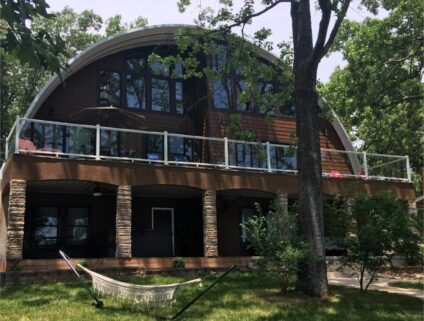
Steel Outside, Southern Soul Inside: The Ultimate Workshop-to-Home Conversion
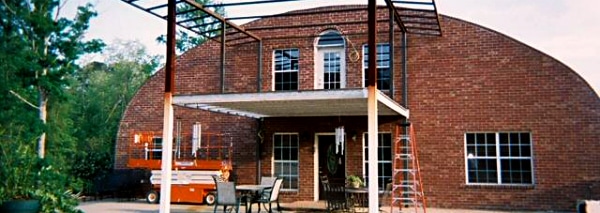
In Forest, Mississippi,, a town defined by rolling farmlands and historic architecture, Andy Wedgeworth’s home is a local legend. But not in the way you might expect.
Andy reimagined what a home could be by converting his existing Quonset workshop into a custom residence, transforming the industrial workshop vibe into a warm, traditional Southern estate with rustic charm.
Why Convert? The Case for “Good Bones”
Wedgeworth had a valuable asset on his property: a steel workshop with good bones. Rather than demolishing it and starting over with traditional construction, he saw an opportunity to bypass the most expensive and time-consuming part of new construction and went straight to redesigning the structure into a new home.
Choosing to live in a steel structure was a strategic choice for the Mississippian. In the deep South, steel offers advantages a wood-frame house can’t match:
- Total Disaster Resilience: Steel is naturally resistant to the heavy hitters of Mississippi weather: hurricane-force winds, tornadoes, and fire.
- The “Termite-Proof” Factor: In humid climates, termites and wood rot are constant threats. A steel shell eliminates these risks.
- Economic Longevity: SteelMaster buildings require significantly less maintenance over decades compared to traditional siding or shingles.
- Open-Concept Freedom: Because the steel arch is self-supporting, there are no interior load-bearing walls. This allowed Andy to design a custom, open floor plan.
The Secret Ingredients: #2 Knotty Pine & Rustic Interior Design
The biggest challenge of a steel home is making it feel “homey.” Andy bridged this gap by leaning into traditional Southern aesthetics.
Wedgeworth covered the interior walls with #2 knotty pine wood, softening the space and adding the traditional warmth of southern homes. The natural knots and grain patterns in the pine create visual interest and texture, contrasting beautifully with the precision of the steel structure supporting it all.
He incorporated rustic doors throughout the home, further reinforcing the traditional residential feel. These design choices prove steel buildings don’t have to look industrial; rather, they’re blank canvases waiting for personal expression.
The “Wall Gap” Technique: How It Works
One of Andy’s most important takeaways for DIY builders is his approach to framing. He notes the process isn’t all that different from a traditional build; it just requires a bit of spatial planning.
“It really wasn’t different than framing any other house,” Andy explains. “I just needed to leave space between the interior and exterior walls.”
This thermal gap is the secret to a comfortable steel home. By leaving space between the steel arch and the interior pine walls, Andy created room for:
- High-Performance Insulation: This keeps the home cool during sweltering Mississippi summers and retains heat in the winter.
- Utility Channels: Plumbing, electrical wiring, and HVAC ductwork are tucked in out of sight, just like a standard home.
- Condensation Control: Proper airflow between the layers prevents moisture buildup, ensuring the structure stays dry and healthy.
“They Never Imagined It Could Look Like This”
For Andy, the best part of the project is the “reveal.” He enjoys watching the faces of neighbors and friends when they walk through the door for the first time.
“Just from driving up out front, they say that they never imagined it would look like it does on the inside,” he says.
This element of surprise speaks to a larger truth about steel building conversions: they challenge our preconceptions about what constitutes a “real” home. The gap between exterior expectation and interior reality demonstrates that home isn’t defined by materials but instead by how those materials are used.
Beyond Conventional: Redefining Home in Mississippi
Wedgeworth’s home proves that innovation and tradition can be complementary to one another. His steel structure provides the strength and efficiency of modern engineering, while his interior design choices honor the warm, welcoming aesthetic Mississippi is known for.
In Forest, Mississippi, where historic homes define neighborhood character, Wedgeworth has added something equally valuable: proof that durability and beauty can coexist, that practicality doesn’t require sacrificing personality, and that the most interesting homes are often the ones that make you reconsider what’s possible.
For anyone with a Quonset building gathering dust on their property, Wedgeworth’s conversion offers an inspiring message: that workshop, barn, or storage building can be transformed into a stunning Quonset home.
Categories
Tags
Related articles
Quonset Hut Airbnbs Make Perfect Addition to Arizona Vineyard
Man and Wife Build Solar-Powered Off-Grid Quonset Home
Couple’s Quonset “Dream Home” Goes Viral on TikTok
Ever Wanted to Stay in a Quonset? Now You Can!
Woman Builds Luxurious Quonset Cabin in Honor of her Father
Lakeside Hunting Cabin in Alaska
Charming Quonset Hut Home in North Carolina
Why A Dream Home In Hawaii Is A Prefab Quonset Hut Home
How One Alaskan Built A Remote Quonset Cabin Kit