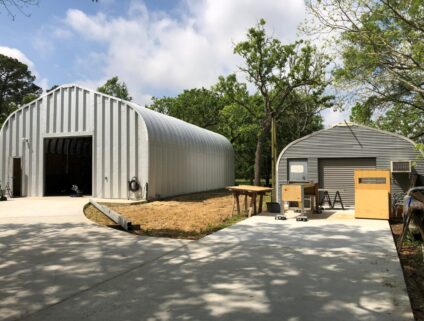
Built for the Storm: How Prefabricated Quonset Huts Survive Category 5 Hurricanes
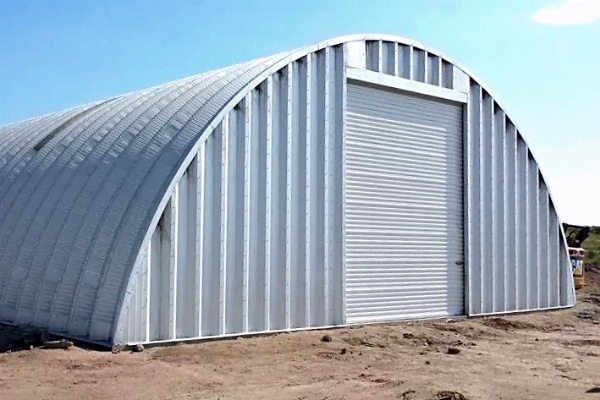
When a Category 4 or 5 hurricane hits, standard buildings fail first. Wind pries open straight walls, tears off roofs, and turns debris into shrapnel. One structure keeps standing through it: the prefabricated steel Quonset hut.
Built from heavy-gauge commercial steel in a continuous arch, these buildings protect against storms that flatten everything around them. Here’s the engineering behind that strength, two real survival stories from Hurricane Charley, and why arches beat straight walls when the wind gets serious.
Why Arches Beat Straight Walls
Straight-wall buildings have a design flaw: the 90-degree joint where the wall meets the roof. Wind pressure concentrates there. Once a window breaks or an edge lifts, pressure builds inside and blows the roof off from within.
An arch has no such weak point:
- Aerodynamic: wind flows over the curve instead of slamming into a flat wall
- Even load transfer: pressure anywhere on the arch distributes down to the foundation
- No seams to fail: no wall-to-roof joint means no built-in failure point
- Debris-proof: heavy-gauge corrugated steel stops flying projectiles cold
Proof: Two Buildings, One Category 4 Hurricane
Hurricane Charley hit Florida in summer 2004 with 150 mph winds, 10 deaths, and $15.4 billion in damage, one of the costliest storms in U.S. history. Whole neighborhoods were leveled. SteelMaster Quonset huts in its path were not.
Punta Gorda — zero wrinkles at 150 mph. Scott Rambo runs an auto restoration garage out of his SteelMaster building in Punta Gorda, ground zero for Charley’s landfall.
“Our SteelMaster made it through with flying colors; a Category 4 hurricane without even a wrinkle in the panels. A lighter-gauge flat-roof building down the street had its roof collapse. I’d recommend SteelMaster to anyone looking for a building.” — Scott Rambo
Kissimmee — a family rode it out inside. Two hours inland, Donna Clark and her family sheltered in their backyard SteelMaster workshop instead of their house.
“We weathered Hurricane Charley in our SteelMaster building. We could feel the wind, but that was it. We’re thankful for the strength.” — Donna Clark
Engineered to HVHZ Code
The design traces back to WWII military structures. Seven decades later, it’s the same arch geometry paired with modern high-strength steel.
- HVHZ certified — meets High-Velocity Hurricane Zone codes required in coastal regions
- Rated up to Category 5 — can be engineered for winds up to 190 mph if necessary
- Impact tested — a wooden plank fired at a panel at 100 mph left only a cosmetic dent, no puncture
Pro Tip: What to Look For
The seamless arch is the advantage: it eliminates the 90-degree wall-roof joints where straight-wall buildings fail, so wind deflects off the curve instead of loading up at a weak point. A quality Quonset hut should be rated for your location’s regional engineering specs. If you’re building in a coastal storm zone, confirm the structure is High-Velocity Hurricane Zone (HVHZ) certified; that’s what proves the building meets the strict codes required in areas like South Florida.
Categories
Related articles

The History of Arches in Architecture: A Journey Through Time
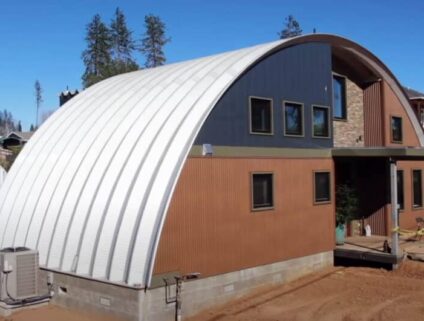
Customer Chooses Quonset Hut After Wildfire Destroys Home
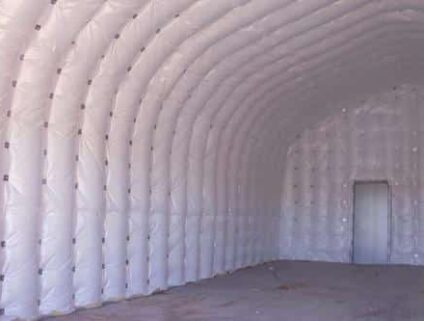
6 Reasons to Choose SteelMaster Batten Insulation
Why Heavy Snow Loads are No Match for Contemporary Quonset Shed
10 Things You Might Not Know About Steel
The Differences Between Quonset Huts and Nissen Huts
How to: Metal Storage Building Kit Construction
5 Step Metal Barn Construction In 3 Days For Farm Equipment
Eight SteelMaster Projects Around the World