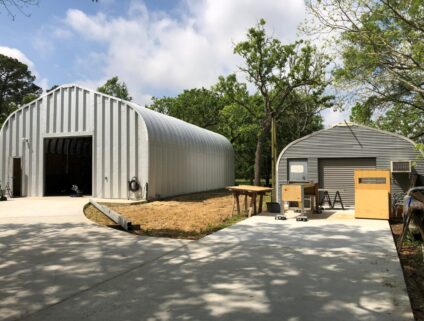
The 150-MPH Sanctuary: Why This Katrina Survivor Rebuilt with Steel
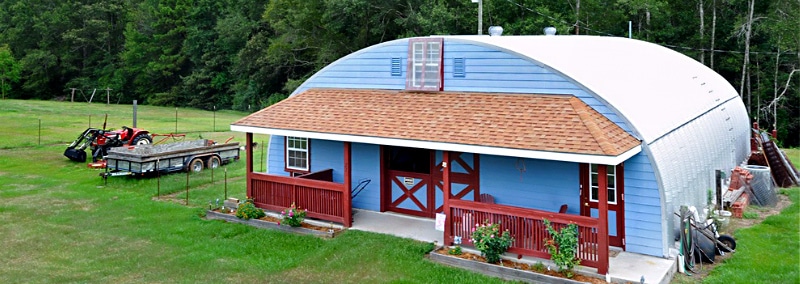
When Hurricane Katrina slammed into the Gulf Coast as a Category 5 storm in 2005, it didn’t just destroy homes; it shattered the sense of security for thousands of residents. For New Orleans evacuees David and Maureen Robert, the disaster was a wake-up call. They realized that if they were going to rebuild, they couldn’t just build back—they had to build stronger.
The answer to their search for safety came from an unlikely, historic source: the SteelMaster Quonset Hut.
A Pilot’s Eye View of Resilience
As a helicopter pilot, David Robert saw the aftermath of the storm from a perspective few others had. Surveying the devastated neighborhoods from the air, he witnessed a landscape of leveled traditional homes and submerged blocks. However, amidst the debris, he noticed a recurring anomaly.
“I only saw one or two [Quonset huts] destroyed, and only when something had fallen on them,” David recalls.
While traditional wood-frame houses had been reduced to matchsticks, the arched steel structures remained standing. That visual evidence was all the proof David needed: the “Q-hut” was the only structure he trusted to protect his family.
Engineered for the Extreme: Why the Arch Works
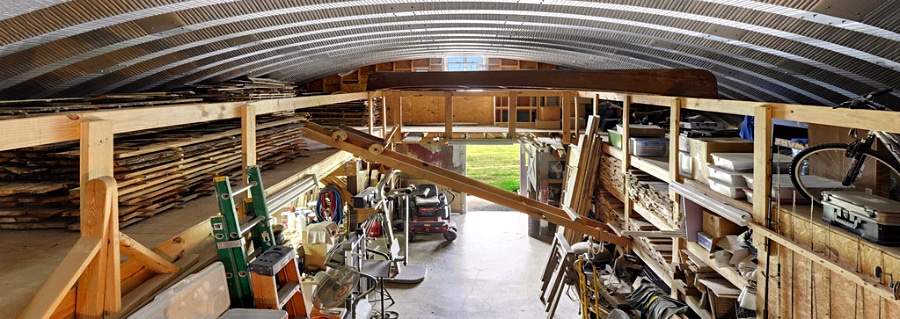
The resilience of a Quonset hut isn’t just about the material; it’s about the physics of the arch. Originally engineered for the military in 1941, these structures were designed for rapid deployment in the world’s harshest environments.
SteelMaster refined this classic design in the 1970s to meet modern High-Velocity Hurricane Zone (HVHZ) standards. Here is why they outlast traditional builds:
- Aerodynamic Shape: The curved profile allows wind to wrap around and over the building rather than pushing against a flat wall.
- Continuous Strength: Unlike traditional homes with separate roofs and walls (the “weak points” where joints fail), the hut is a single, continuous unit.
- FEMA-Grade Protection: These structures meet FEMA 320 requirements, capable of withstanding horizontal impacts of 100 mph and vertical impacts of 67 mph.
- Water-Tight Security: Overlapping steel panels create a redundant barrier against the driving rain that often causes more damage than wind.
Building a “Quiet” Fortress
The Roberts chose a 2,000-square-foot SteelMaster model and, remarkably, erected the structure themselves. Their custom home is now rated to sustain winds up to 150 mph—surpassing the requirements for even the most severe hurricanes.
Inside, the home is a masterclass in functional design, featuring:
- A spacious open-concept kitchen.
- A dedicated workshop and den.
- A peaceful master bedroom.
Perhaps the most telling detail of their new life is how they experience bad weather. “The only way we even know there’s a storm is if the dogs start barking,” they say. In a region where a thunderstorm can cause anxiety, the Roberts found total peace of mind.
A Proven Sanctuary Hits the Market
After years of enjoying their storm-proof haven, the Roberts are preparing for a new chapter. To be closer to family, they have listed their custom Mississippi Quonset home for sale.
For a buyer looking for a home that has already passed the ultimate “stress test,” this property represents more than just real estate; it represents an investment in absolute safety. In an era of increasingly unpredictable weather, the Roberts’ story proves that sometimes the most unconventional shape is the most secure one.
Categories
Tags
Related articles

The History of Arches in Architecture: A Journey Through Time
Customer Chooses Quonset Hut After Wildfire Destroys Home
6 Reasons to Choose SteelMaster Batten Insulation
Why Heavy Snow Loads are No Match for Contemporary Quonset Shed
10 Things You Might Not Know About Steel
The Differences Between Quonset Huts and Nissen Huts
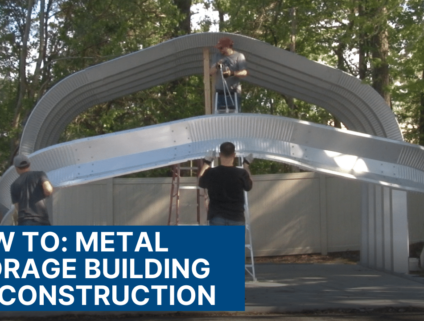
How to: Metal Storage Building Kit Construction
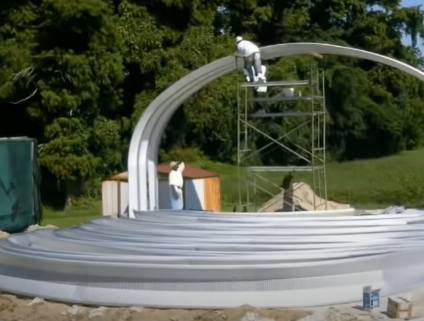
5 Step Metal Barn Construction In 3 Days For Farm Equipment
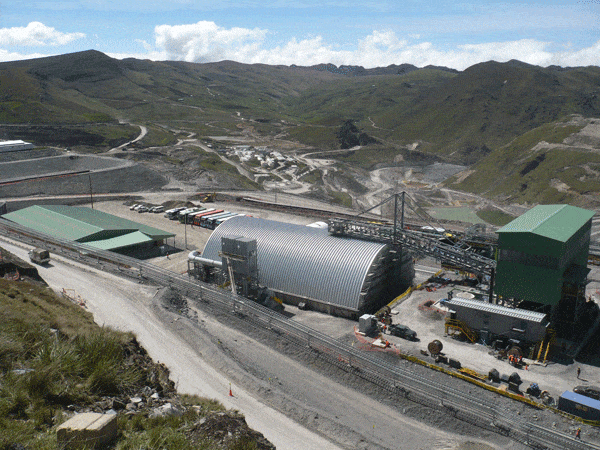
Eight SteelMaster Projects Around the World