

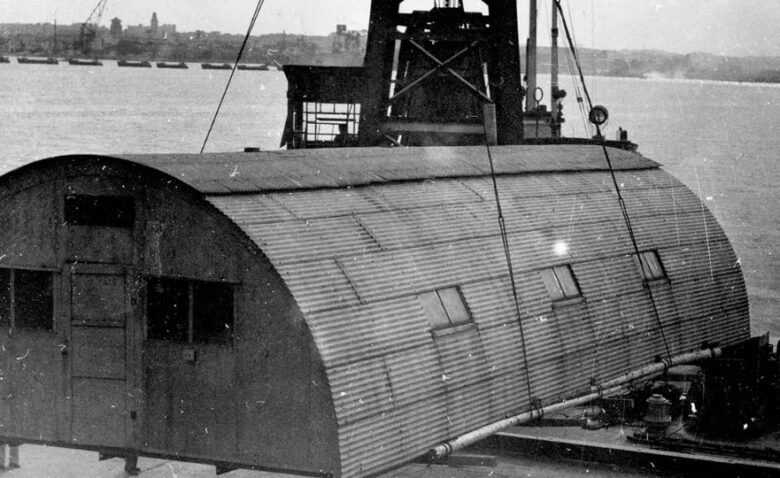
Quonset Hut History
Quonset Hut History: From WW2 Bunker to Modern Steel Building
Over 150,000 Quonset huts were manufactured during World War II—enough to circle the Earth if placed end-to-end. Today, thousands still stand strong, transformed into storage buildings, homes, businesses, churches, and community centers across America. What began as a wartime necessity has become an enduring symbol of American ingenuity and adaptation.
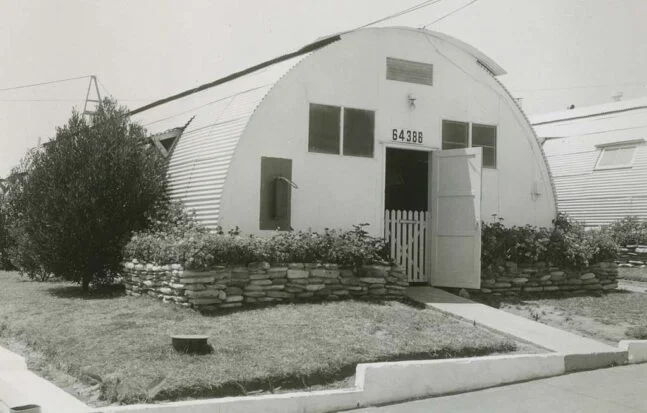
Quick-Reference Timeline
1916 – Nissen hut invented by Lt. Colonel Peter Nissen (WWI)
1941 – Quonset hut developed at Quonset Point, Rhode Island
1941-1945 – Mass production for WWII (150,000+ units)
1946-1960 – Surplus huts repurposed for civilian use nationwide
1970s – Modern steel arch building technology emerges
1990s – X-model and A-model were invented by SteelMaster Buildings, expanding applications
2000’s – Today – Advanced materials, engineering, and sustainable design
What is a Quonset hut?
The definition of a Quonset hut is a sturdy, prefabricated arch structure made of galvanized steel. Quonsets are a type of building that combines the walls and roof into one continuous arch, distributing the building load evenly and requiring no internal supports.
Did you know? The name “Quonset” derives from the Algonquian word meaning “small long place,” referring to the location in Rhode Island where these revolutionary structures were first produced.
How did the Quonset hut get its name?
The Quonset hut is named after the location where it was first built, the Davisville Naval Construction Battalion Center at Quonset Point, Rhode Island. This proved to be a valuable and strategic location for the U.S. Navy, with the Construction Battalion Center creating Quonset huts for the surrounding Camp Thomas, Camp Endicott, the Advanced Base Depot, and the Advanced Base Proving Ground, as well as shipping them around the world.

Who invented the Quonset hut and when?
The George Fuller Construction Company is credited with being the first company to manufacture Quonset huts on behalf of the US Navy in 1941. The exact inventor or designer isn’t known, but the design is based on the Nissen hut design that originated from World War I.
In World War II, the U.S. Navy needed buildings that could be quickly assembled and disassembled and withstand the rigors of military deployment. The Quonset hut wasn’t necessarily invented from scratch but represented a vast improvement over the Nissen Hut.
Fast Fact: A standard WWII Quonset hut could be assembled by 10 unskilled laborers in just one day with only basic hand tools, making it ideal for military applications. The original Quonset construction manuals are available to review on the US Navy’s Seabee History Museum’s website.
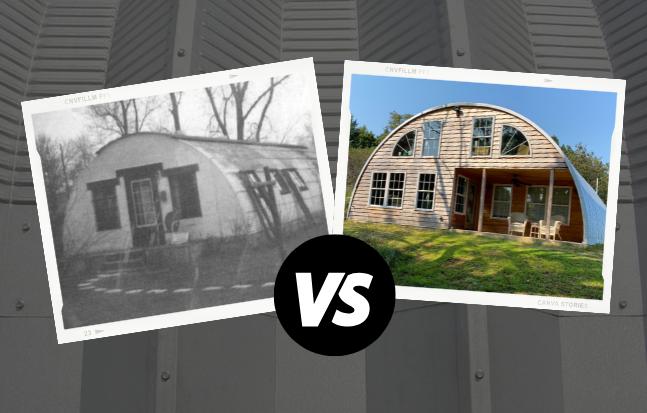
What's a Nissen hut?
Named after its inventor, Lt. Colonel Peter Nissen, a Canadian officer in the Royal Engineers during the First World War, Nissen huts are similar to Quonset huts in form and function but are generally smaller with simpler designs.
Nissen huts:
- Deeper curves and lower walls, making interiors less spacious
- Typically 16 feet wide
- Used primarily for storage and utility purposes
- Corrugated iron construction with wooden end walls
Quonset huts:
- Shallower arches and more vertical walls for greater usability
- Standard sizes: 20 feet and 40 feet wide
- Versatile applications from housing to hangars
- Improved materials and assembly methods
What are Jamesway huts?
Unlike the Nissen and Quonset huts that use corrugated steel in their construction, the lesser-known Jamesway huts used a wooden frame. Jamesway huts also employ a rounded, semicircular construction, making them suitable for snowy conditions, which is where they were primarily used.
Today’s Quonset huts can be reinforced with batten or spray foam insulation, making them as comfortable as Jamesway huts, and as long-lasting and durable as steel structures should be.
Why did the U.S. Navy use Quonset huts?
The U.S. Navy wanted an all-purpose building that was lightweight, easy to ship and easy to assemble. On top of that, Quonset huts have several key advantages that made them the obvious building of choice in World War II.
Clear span interior
With no structural support poles or walls, Quonsets allow for unobstructed building space.
Strength of building
The use of commercial-grade steel coupled with the arch design gives Quonset huts undeniable strength
Quick construction
Designed as prefabricated kits, Quonset huts allow military units to assemble them quickly on-site.
Portable
Quonset huts can be assembled, disassembled, and moved to different bases depending on need
Cost-effective
Original units cost approximately $1,000 each (equivalent to about $18,000 today)
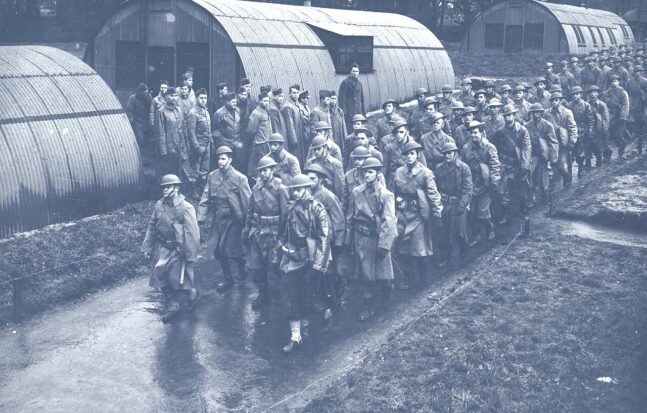
WWII Production and Deployment
During World War II, Quonset hut production reached industrial scale. The U.S. military deployed these structures to every theater of war—from the frozen Aleutian Islands to the scorching deserts of North Africa and the humid jungles of the Pacific.
They served countless purposes:
- Troop barracks and officers’ quarters
- Medical facilities and field hospitals
- Aircraft hangars and maintenance shops
- Supply warehouses and ammunition storage
- Communication centers and command posts
- Mess halls and recreation facilities
- Equipment storage
The versatility and rapid deployment capabilities of Quonset huts gave Allied forces a significant logistical advantage.
Post-WWII: Quonset Huts in Civilian Life
When World War II ended in 1945, the military found itself with a massive surplus of Quonset huts. Rather than scrapping these structures, the government sold them to civilians for as little as $1,000 or less. This coincided perfectly with America’s urgent housing shortage as millions of veterans returned home and started families.
The Housing Crisis Solution
Between 1946 and 1950, thousands of surplus Quonset huts were converted into:
- Emergency housing: Veterans and their families transformed huts into starter homes, often adding wood facades, interior walls, and modern amenities
- Small businesses: Entrepreneurs converted them into diners, auto repair shops, retail stores, and offices
- Farm buildings: Agricultural communities used them for equipment storage, livestock shelters, and grain storage
- Community spaces: Churches, community centers, schools, and recreation facilities
Cultural Impact
Quonset huts became embedded in American culture during the late 1940s and 1950s:
- Entire neighborhoods of “Quonset communities” sprang up near former military bases
- They appeared in films, literature, and photography as symbols of post-war transition
- College campuses used them as temporary classroom and dormitory space during enrollment booms
- Veterans’ organizations often met in converted Quonset structures
Many of these civilian conversions still exist today, with some listed on historic preservation registries.
The Evolution: 1950s to Modern Day
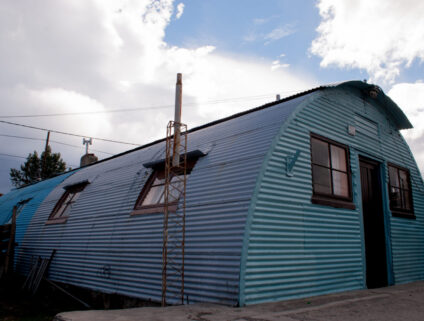
1950s-1960s: Refinement Era
As Quonset huts transitioned from temporary shelters to permanent structures, owners and builders addressed early limitations:
- Insulation improvements: Spray foam and fiberglass insulation made huts comfortable year-round
- Interior finishing: Drywall, drop ceilings, and interior framing created conventional room layouts
- HVAC compatibility: Heating and cooling systems were integrated into designs
- Aesthetic enhancements: Wood siding, brick facades, and other exterior treatments improved curb appeal
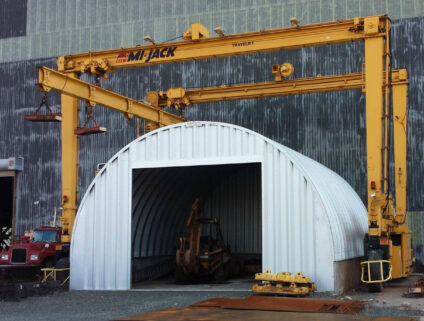
1970s-1990s: Modern Engineering
The 1970s saw a renaissance in arch-style steel buildings with significant technological advances:
- Heavier-gauge steel with superior strength-to-weight ratios
- Advanced anti-corrosive coatings extending lifespan
- Computer-aided design allowing for custom configurations
- Improved fastening systems for easier assembly
- Building code compliance and engineering certifications
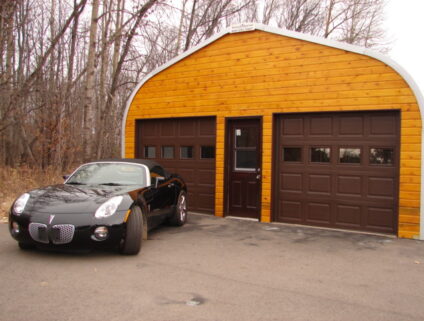
1990s: X-model & A-model Invented
In the 1990s, SteelMaster Buildings refined Quonset design, creating the two models with a 4:12 pitched roof, the X-model (with arched walls) and A-model (with straight walls). The industry quickly copied these designs because the pitched roof increased the strength and possible applications for Quonsets.
Suited for areas with higher snow-load requirements
Retains easy transportation and quick construction of original Quonset designs
Used for both industrial and residential applications
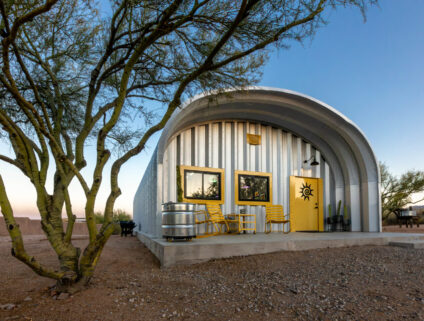
2000s-Present: Sustainability and Innovation
Today’s Quonset huts represent the pinnacle of the design’s evolution:
- 100% recycled steel construction
- Energy-efficient designs with superior R-values
- HVHZ (High Velocity Hurricane Zone) approval
- LEED certification capabilities
- Modular customization options
- Integration with modern building systems
Specifications: Then and Now
| Feature | Original WWII Quonset | Modern Quonset |
|---|---|---|
| Steel Gauge | 22-24 gauge | 14-22 gauge (heavier) |
| Standard Width | 20 ft or 40 ft | 10 ft to 80+ ft |
| Length | 48 ft typical | Unlimited (modular) |
| Lifespan | 20-30 years estimated | 50+ years (warranty backed) |
| Cost (WWII dollars) | ~$1,000 | N/A |
| Insulation | None (uninsulated) | R-30+ options available |
| Wind Rating | Not rated | Up to 180 mph |
| Snow Load | Basic | 200+ lbs/sq ft capable |
| Customization | None | Extensive options |
How have modern Quonset huts increased energy efficiency over time?
Compared to the original military applications, where energy efficiency was a secondary concern, Quonsets today have evolved to be extremely energy efficient and are Energy Star-rated.
- Superior insulation options: Spray foam and batten insulation can achieve R-30 or higher
- Reduced thermal bridging: Continuous arch design minimizes heat loss points
- Reflective coatings: Specialized roof coatings like GalvalumePlus reflect solar heat
- Tight construction: Prefabricated panels create excellent air seals
- Lower HVAC costs: Smaller volume compared to traditional buildings with same square footage
What’s so great about arches in architecture?
The answer to the question about the Quonset hut’s famous domed roof is a matter of physics. An arch can support more weight because when weight is placed on top of the arch, the force is carried outward along the curve to supports known as abutments.
Thus, an arched or domed design can better withstand earthquakes, severe weather, and other acts of nature that send other types of structures crumbling to the ground.
Historical Examples of Arch Strength
Ancient Rome and Mesopotamia are the first known societies to incorporate the arch into construction. The resilience of arched construction is evidenced by structures that have survived for millennia:
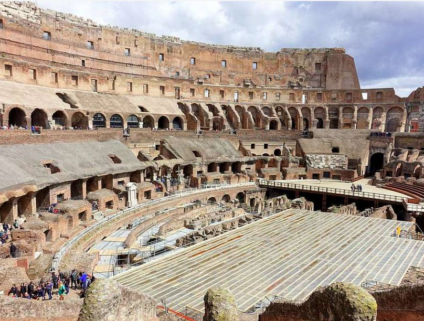
The Roman Colosseum (circa 80 AD)
Nearly 2,000 years old, this massive amphitheater still stands with its intricate arch system intact
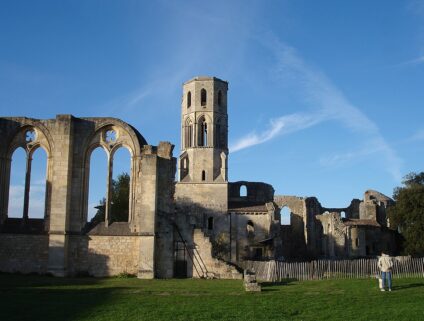
Benedictine Abbey Sauve Majeure (11th century)
Medieval arched ruins in France demonstrate lasting structural integrity
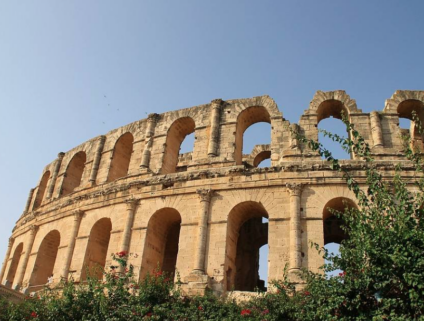
El Djem Amphitheatre, Tunisia (circa 238 AD)
Third-largest Roman amphitheater, preserved through arch construction
For thousands of years, builders have used different types of arches in architecture to create some of the most spectacular structures on earth. Now, designers use modern arch panel systems to create structures that are just as aesthetically pleasing and timeless.
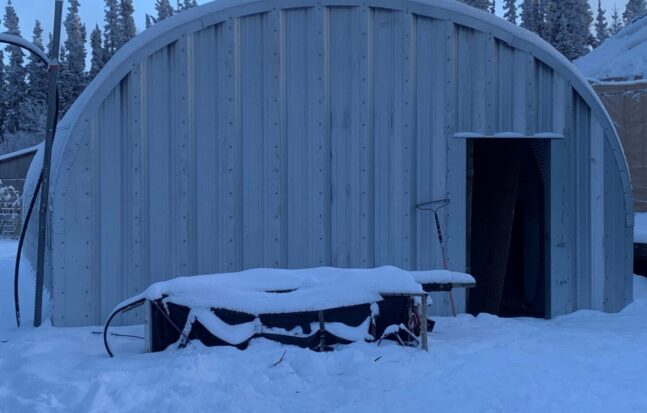
What are today’s Quonset huts made of?
While an arch building could technically be made from various materials, steel remains the top choice for its strength, longevity, and low maintenance. During WWII, Quonset huts were constructed with thinner gauge steel than the heavy-duty, commercial-grade steel used today. Yet many of those early structures still stand strong, which speaks to the durability of modern Quonset huts engineered to be even tougher.
Why Steel?
While tin and aluminum can provide cover for a building, they do not stand up to the rigors of weather or natural disasters. Steel allows for Quonset huts to be virtually indestructible, with modern Quonset huts receiving HVHZ approval for hurricane zones.
Where are Quonset huts most popular today?
Quonset huts serve diverse purposes across all regions of the United States and around the world:
Regional Popularity
- Rural and agricultural areas: Equipment storage, livestock facilities, hay barns, and workshop spaces
- Coastal regions: Storm-resistant construction makes them ideal for hurricane-prone areas
- Snow country: Superior snow load capacity serves mountain and northern communities
- Urban areas: Warehouses, workshops, artist studios, and unique residential conversions
- Military bases: Continued use for storage, maintenance facilities, and quick-deploy structures
Cost Comparison: Then and Now
Understanding the value proposition of Quonset huts across different eras:
Original WWII Costs
- Military production cost: Approximately $1,000 per unit
- Civilian surplus price: $500-$1,000 (1946-1950)
- Adjusted for inflation: Equivalent to $15,000-$18,000 today
Modern Pricing
While specific pricing varies by size and customization, Quonset huts typically cost:
- 30-50% less than conventional construction per square foot
- Faster construction reduces labor costs significantly
- Lower lifetime costs due to minimal maintenance
Total Cost of Ownership (50 years)
Compared to conventional buildings, Quonset huts offer:
- Lower construction costs (initial savings)
- Reduced maintenance expenses (no roof replacement, painting, etc.)
- Decreased energy costs (efficient heating/cooling)
- Extended lifespan (outlasts traditional structures)
Examples of Modern Architects Using Arch-Style Buildings
Contemporary architects and designers continue to embrace arch-style construction, creating structures that blend the time-tested strength of Quonset design with cutting-edge aesthetics.
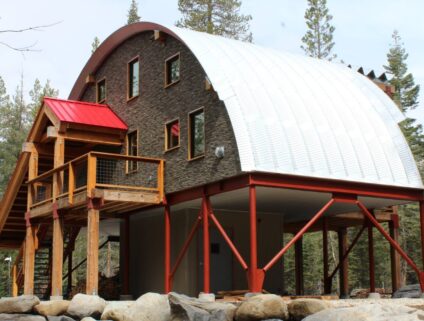
The Q-Cabin Kits
Vern Sneed of NonCombustibles LLC has collaborated with SteelMaster to create “Q Cabin Kits,” economical, Quonset hut cabins are completely fire resistant.
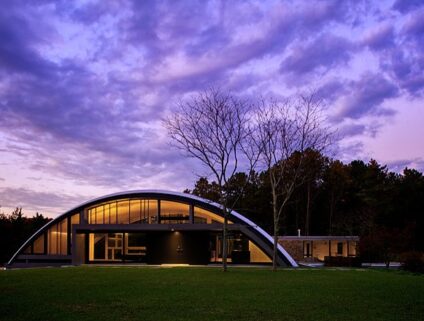
Arc House
The Arc House, designed by Maziar Behrooz, masterfully incorporates industrial construction to create an elegant, architectural work of art.
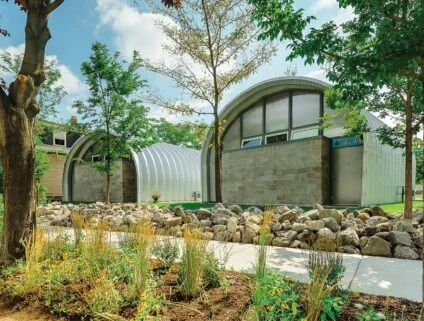
Caterpillar
Architect Ishtiaq Rafiuddin of UNDECORATED designed Caterpillar, which won the 2021 Architizer A+Product Award for Best in Facades.
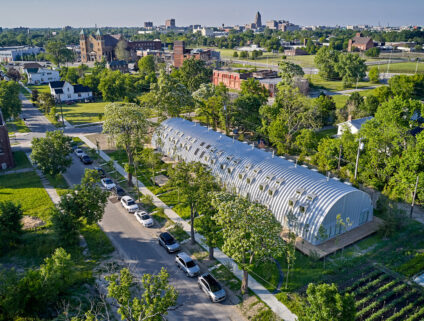
True North
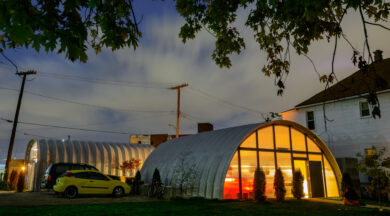
True North is an award-winning real estate project in the Core City neighborhood of Detroit made from eight SteelMaster Quonset huts.

St. John's Cathedral
SteelMaster’s Design Specialist, William Swafford, coordinated with engineers and architects to rebuild some of the stonework and incorporate structural steel into the cathedral.
Quonset hut FAQs
How do you spell and pronounce Quonset?
You’ll find several misspellings of Quonset — quanset, quanzit, quanza, and even kwanzaa hut — but the correct spelling is Q-U-O-N-S-E-T. Here are pronunciation guides:
Pronunciation like: kwaan-suht
Pronunciation with a soft “s”: ˈkwän(t)-sət
Pronunciation with a hard “s”: ˈkwän-zət
How much does a modern Quonset hut cost?
Costs vary by size and customization, but Quonset huts typically cost 30-50% less than conventional construction per square foot. A basic 30’x40′ structure might start around $15,000-$25,000 for the building kit, with total project costs depending on foundation, finishing, and site work.
Can Quonset huts withstand hurricanes and tornadoes?
Yes, when properly engineered and anchored. Modern Quonset huts can achieve HVHZ (High Velocity Hurricane Zone) approval and withstand winds up to 180 mph. The aerodynamic shape and structural steel provide exceptional storm resistance.
Can I add windows and doors to a Quonset hut?
Absolutely. Modern Quonset designs accommodate windows, doors, overhead doors, skylights, and other openings. These are engineered into the structure to maintain strength while providing natural light and access.
How long will Quonset huts last?
Because Quonset huts are made of steel coated with anti-corrosive agents and possess inherent structural strength, they can last a lifetime. Their disaster-resistant design allows them to withstand punishing weather that would destroy standard buildings. Many original WWII Quonset huts built in 1941-1945 remain standing and functional 80+ years later.
Are Quonset huts loud when it rains?
Uninsulated metal buildings can be noisy, but properly insulated Quonset huts with spray foam or fiberglass insulation significantly reduce sound transmission. Most owners report noise levels comparable to conventional buildings.
The Enduring Legacy
For over eight decades, the strength and versatility of the Quonset hut have continued to serve families and businesses throughout the United States and around the world. From their origins as a wartime necessity to their current role in sustainable, cost-effective construction, Quonset huts represent American innovation at its finest.
The next time you see a curved steel building, remember: you’re looking at a direct descendant of those revolutionary structures that helped win World War II and rebuild America in its aftermath. The Quonset hut’s journey from battlefield to backyard exemplifies how great design transcends its original purpose, adapting and thriving across generations.
Ready to explore modern Quonset options?
Contact us to discuss how a SteelMaster Quonset hut can meet your residential, commercial, or agricultural needs with unmatched durability, efficiency, and value.
Fill out the form below to get a free project consultation
Form Capture Name in CRM: English - Contact Form
"*" indicates required fields
By adding my phone number, I agree to receive recurring text messages at the phone number provided from SteelMaster Consent is not a condition to purchase. Carrier & data rates may apply. Message frequency may vary. Reply STOP to cancel. Reply Help for more information. View our Terms of Service for details.