

Recycled Steel in Pre-Engineered Metal Buildings (PEMB)
The PEMB industry relies heavily on recycled steel, making these structures among the most environmentally sustainable building options available. Most steel used in PEMBs, including Quonset huts, contains significant recycled content, with many products containing 90 percent or more recycled material.
For building construction, steel has three primary advantages:
- Structural: Using steel allows for engineers to do more with less
- Durability: Steel is much stronger than aluminum, tin or other metal building options
- Economic: Cheaper construction and lower building maintenance costs
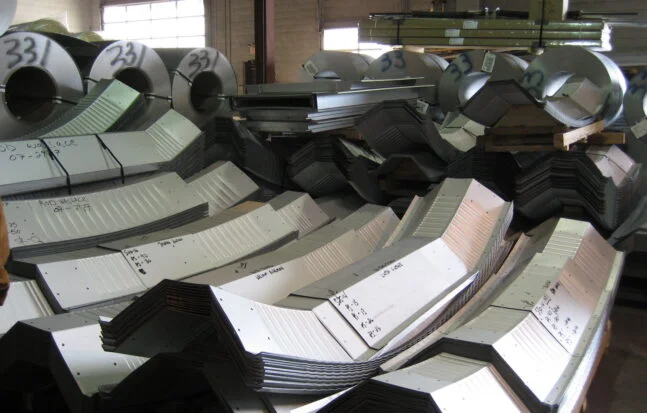
1. Structural Performance: Doing More with Less
- High Strength-to-Weight Ratio: Steel can support heavy loads while maintaining structural integrity.
- Clear Span Capabilities: Supports spans of 80+ feet without interior columns, maximizing usable floor space.
- Exceptional Strength: Unlike wood, steel does not warp, shrink, or expand with moisture.
- Precise Engineering: Steel properties are consistent, allowing engineers to calculate precise load capacities.
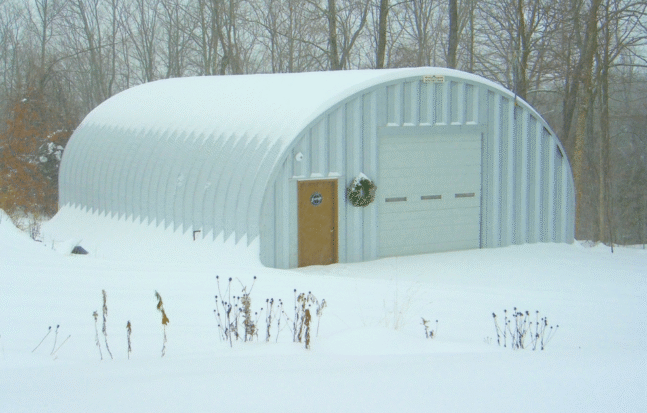
2. Durability and Resilience: Long-term Solutions
- Weather & Corrosion Resistance: Outlasts organic materials through UV and corrosion-resistant treatments.
- Non-Combustible: Inherently fire-resistant, rated type II non-combustable.
- Pest Protection: 100% resistant to termites, carpenter ants, and wood-boring beetles.
- Extreme Load Resistance: Engineered steel can withstand extreme wind loads and seismic activity
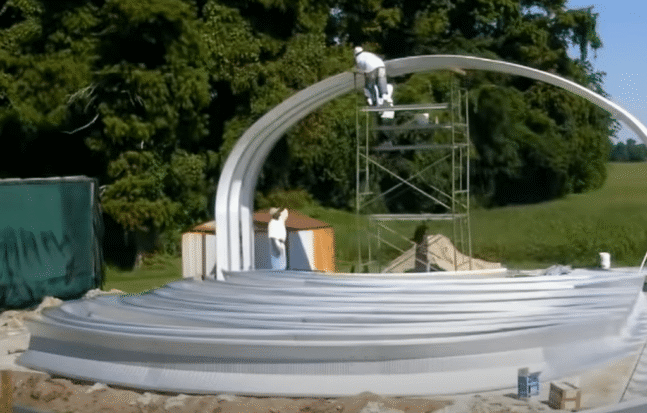
3. Economic Advantages: More Bang For The Buck
- Rapid Assembly: Pre-fabricated components reduce on-site construction time by 30%–50%.
- Lower Lifecycle Costs: Minimal ongoing maintenance compared to wood or masonry.
- Possible Insurance Savings: Non-combustible ratings and disaster resilience can result in lower insurance premiums.
- Thermal Efficiency: Steel frames accommodate high-R-value insulation, slashing long-term energy costs.
Core Comparison: Recycled Steel vs. Traditional Materials
| Feature | Recycled Steel | Traditional Wood/Light Metal |
|---|---|---|
| Recycled Content | Up to 90%+ | Typically low to none |
| Construction Speed | 30-50% faster | Standard timeline |
| Maintenance | Low (Rot/Pest proof) | High (Vulnerable to rot/pests) |
| Span Depth | High (Clear spans 80ft+) | Limited (Requires columns) |
Understanding Recycled Steel in PEMBs
Recycled steel is material recovered from end-of-life products and manufacturing scrap and reprocessed into new structural components. It is a permanently available resource, meaning it can be recycled infinitely without losing strength, quality, or structural integrity.
- Average Recycled Content: Structural steel averages 93%, with some components reaching 98%.
- Key Advantage: Unlike most materials, steel’s magnetic properties allow for 100% recovery and separation from waste streams.
The 8-Step Steel Recycling & Manufacturing Process
Step 1: Collection
Recovery of scrap from demolished buildings, manufacturing waste, and obsolete machinery.
Step 2: Sorting & Grading
Magnetic separation removes non-ferrous materials. Steel is graded by alloy composition to ensure suitability for structural use.
Step 3: Processing
Large pieces are shredded or cut into manageable pieces using heavy-duty shears and torches.
Step 4: Melting
Scrap is melted in Electric Arc Furnaces (EAFs) at temperatures exceeding 1,370°C (2,500°F). EAFs are the industry standard for high-recycled-content steel.
Step 5: Refining & Alloying
Impurities are removed, and specific alloys are added to meet ASTM standards for construction-grade strength.
Step 6: Casting
Molten steel is poured into a machine that slowly cools and hardens it into billets, blooms, or slabs to then be rolled and formed into a final product.
Step 7: Rolling & Forming
Steel is hot-rolled or cold-formed into specific PEMB shapes, such as arches, I-beams, channels, and plates.
Step 8: Fabrication
Components are precision-cut and drilled in a factory environment according to engineering specs, minimizing on-site waste.
Challenges & Solutions in the Steel Recycling Ecosystem
The steel industry must continually address recycling challenges to improve sustainability and economic viability. There are four main issues recyclers must address.v
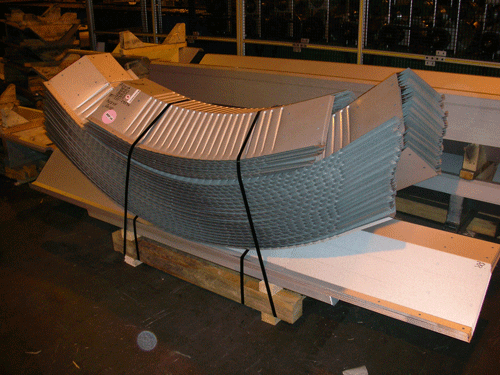
1. Material Quality Control
- Challenge: Ensuring recycled steel meets stringent structural performance standards
- Solution: Advanced testing, quality control procedures (like spectroscopic analysis), and certification programs verify material properties and performance
2. Coating and Contaminant Management
- Challenge: Protective coatings (paints, zinc galvanization, primers) can introduce impurities during the melting process.
- Solution: Modern recycling facilities remove or process coatings during melting, and new coating technologies facilitate easier recycling
3. Deconstruction vs. Demolition
-
- Challenge: Traditional “wrecking ball” demolition often twists or mangles steel, making it harder to process and lowering its scrap value.
- Solution: Selective Deconstruction. Selective deconstruction (unbolting and dismantling) methods preserve steel members for direct reuse or high-quality recycling
4. Economic & Market Volatility
-
- Challenge: Scrap steel prices vary with economic conditions, affecting PEMB project costs
- Solution: Long-term supply agreements and strategic planning help stabilize material cost spikes.
| Issue | Challenge | Solution |
|---|---|---|
| Quality | Performance Variance | Spectroscopic Testing/Certification |
| Purity | Zinc/Paint Coatings | EAF Refining/Slag Removal |
| Logistics | Material Damage | Selective Deconstruction |
| Finance | Price Volatility | Long-term Supply Contracts |
Environmental Impact Lifecycle: Recycled Steel PEMBs
Using recycled steel in pre-engineered metal buildings provides substantial environmental advantages throughout the building lifecycle, from material production through eventual demolition and reuse.
1. Production Phase: Resource Conservation
Recycling steel reduces energy consumption by 60% compared to virgin production.
- Carbon Mitigation: Each ton of recycled steel prevents ~1.5 tons of CO2 emissions.
- Resource Preservation: For every ton recycled, 2,500 lbs of iron ore, 1,400 lbs of coal, and 120 lbs of limestone.
- Pollution Reduction: Consumes 40% less water and significantly lowers air pollution by eliminating ore-smelting stages.
2. Construction Phase: Precision & Efficiency
- Zero-Waste Manufacturing: Components are pre-engineered are precisely manufactured, with minimal excess material.
- Logistics: Reduced waste means fewer debris-removal trips, lowering transport-related emissions.
- Speed: 30-50% faster assembly reduces the duration of on-site heavy equipment use and local site disturbance.
3. Operational Phase: Performance
- Thermal Envelope: Steel allows for optimal insulation installation, reducing heating and cooling energy consumption.
- Cool Roofing: Reflective metal roofing systems reduce cooling loads in warm climates.
- Longevity: A service life of 50+ years lowers the environmental cost per year of use.
4. End-of-Life: The Circular Loop
- 100% Recovery: Unlike concrete or treated wood, nearly 100% of a steel structure can be recovered.
- Deconstruction: Certain PEMBs, like Quonsets, are bolted together, allowing for systematic disassembly and direct component reuse in new projects.
- Limited Post-Life Waste: Minimal demolition debris compared to traditional masonry or timber.
| Category | Impact Reduction |
|---|---|
| Energy Use | -60% |
| CO2 Emissions | -1.5 Tons |
| Water Usage | -40% |
| Recyclability | 100% |
The Future: Technology & The Circular Economy
Technological innovations and sustainability initiatives continue advancing the use of recycled steel in pre-engineered metal building construction.
1. Next-Gen Manufacturing
- AI Optimization: Machine learning now generates designs that use the absolute minimum amount of steel required for safety.
- 3D Printing: Additive manufacturing with steel allows for complex, custom components with zero scrap waste.
- Green Metallurgy: New processing tech is further reducing the energy required for the Electric Arc Furnace (EAF) melting phase.
2. Transparency & Regulation
- Responsible Sourcing: Blockchain technology is being used to track steel from the scrap yard to the job site, verifying recycled content for LEED or BREEAM certification.
- BIM Integration: Building Information Modeling now includes “carbon accounting” data, allowing architects to see the environmental impact of their material choices in real-time.
- Carbon Pricing: As governments implement carbon taxes, low-embodied-carbon materials like recycled steel become the most financially viable option.